 A Field of Dreams:
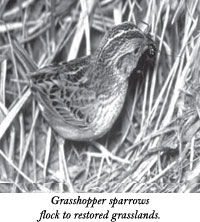
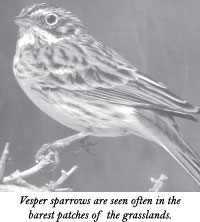
 Returning Grassland Birds to the Eastern Shore of Maryland By Douglas E. Gill How do we save species that are endangered because their habitat is disappearing or gone? The urgency to find an answer grows daily as our human population swells, as urban sprawl gobbles up more fields and forests and turns them into bedrooms, malls, and roadways. Direct habitat destruction is far and away the #1 cause of species declines and extinctions in the world, in the United States, and in Maryland today. The answer may be surprisingly simple: Give them back their habitat . . . and they will come! My associates and I have found this fantasy formula to work with astonishing alacrity in the case of grassland birds and plants on Maryland’s Eastern Shore. An exciting experiment in bird conservation and habitat restoration is taking place at the Chester River Field Research Center (CRFRC) on Chino Farms, a few miles east of Chestertown. An effort to recreate a large sward of the original coastal prairie grassland of the Eastern Shore has been underway since Spring 1999, when 227 acres of row cropland were taken out of production and planted in native warm-season grasses and forbs. Scores of grasshopper sparrows arrived within a month of planting, the males established territories, mated pairs nested, and hundreds of new hatchlings were produced in that summer of hot drought. A dozen vesper sparrows, evidently nesting as indicated by their breeding condition, were seen often in the bare-dirt open patches of the grasslands. The following summer, 16 dickcissels arrived, built nine nests, and reared a dozen hatchlings from five of those nests. Where did all these ready-to-breed grasshopper sparrows, vesper sparrows, and dickcissels come from? We are confident they were not there in such impressive numbers in the previous decades while the acreage was cultivated in corn, barley, and soybeans. The original crop fields were productive and bountiful from the perspective of the farmers, but were morose monocultures and boring bird habitat from the naturalist’s point of view. How did these rare birds find the newly planted grasslands? Were they wandering the skies of the eastern US seaboard looking desperately (and often fruitlessly) for suitable grassland habitat? Did they peer down and fluff their feathers at the sight of one small patch near Chestertown, Maryland and joyously alight in the CRFRC grasslands to the astonishment of a hopeful crowd of University of Maryland ornithologists? At the time the grasshopper sparrows and vesper sparrows appeared, the “restored grasslands” were little more than 227 acres of dreary, postwinter abandoned cornfield, with exposed dirt visible over 97% of the ground and limp cornstalks lying helterskelter. Weeds, such as mare’s tail (Conyza canadensis), daisy fleabane (Erigeron strigosus), and cut-leaved evening primrose (Oenothera laciniata) were sprouting, but none of the eight species of warm-season grasses had yet emerged. We have no idea whence the birds came or how they found the CRFRC grasslands. As those mysteries remain to be solved, we are delighted that we offered the habitat and that they came. And continue to come—we have banded 1,200 adult individuals in five and one-half years. When the owner of Chino Farms, Dr. Henry F. Sears, called me in 1998 and asked if I might help him do a bold and risky experiment, namely transform his farm into wildlife habitat for birds, I hesitated and asked for some time to think about it. After all, I was a bespectacled professor, an academic. I was focused on teaching arcane courses in theoretical and basic ecology and evolutionary biology at the University of Maryland, College Park. I knew nothing about agriculture and applied or restoration ecology. It was true, I mused, that I was an avid birdwatcher, and a field botanist studying wild populations of pink lady’sslipper orchids for 28 years. I had been a life-long naturalist since my childhood in New Jersey, had trained as an ornithologist for 20 years, had studied populations of red-spotted newts and assorted other frogs and salamanders for a dozen years, and had investigated galling aphids on the leaves of witch-hazels for a decade. Hmmm, I thought—I should be professionally equipped to answer this farmer’s question about wildlife habitat. The more I thought about Dr. Sears’ request, the more intrigued I became about the challenge. I quickly realized I was facing the most important conceptual issues and questions in conservation today: in short, how does one decide WHAT ARE the most important problems, and how does one warrior set his (or her) personal and professional time and effort to solving the most urgent of crises? To organize my thoughts on this gigantic issue, I listed issues and questions. What are the environmental crises facing the world today? Well, let’s see.
Education? Worrisome, not an impressive record, but forever hopeful. (How can people across the United States and the world continue to trash their environment as they do? How is it possible that half of the adult US populace voted into office our current president and his anti-environmental regime and policies? How have we failed to educate these people? We must strive harder. I’ll try harder in my classes.) Legislation? Alarming. The battle against environmentally ignorant legislators and crass politicians has been going on for 300 years in the US and appears endless. The enlightened minority in Congress and the state legislatures occasionally succeeds, but it is not clear to me how to improve the situation except to write more letters and to continue to exercise an intelligent vote. Litigation? Iffy—sometimes we win, sometimes we lose. Political, social, economic, and entrenched legal history are stronger forces than reason and the appeal of natural beauty. Confrontation? Been there, done that. Always small scale—this whale, that tree. Not the solution for the big, long-term problems. Preservation? Essentially finished, done. We have identified all the pristine places in the world and United States, major powerful groups like World Wildlife Fund (WWF) and The Nature Conservancy (TNC), and local grass-root organizations, are mobilized, fundraising, and actively protecting the last great places. I’ll send another couple thousand dollars. Restoration? AHA! This is it! Habitats are not as fragile as we have been screaming. Habitats are not like crystal figurines on shelves that, touched by humanity even lightly, fall to the ground and smash into a million fragments, never to be re-assembled as a single item of beauty.
Moreover, the top executives of major land trusts and conservation organizations tell me that they are inundated by land bequests and land donations, because rural America is aging and retiring, and the children of farmers have been lured away from family farms by the Pied Piper of computers. Many senior landowners across the country have decided not to sell out to developers but instead generously wish to enrich future generations with the wildlife, flowers, open spaces, clean air, and burbling brooks they enjoyed all their lives.
Another question sprang to mind as I pondered the implications of prioritizing conservation issues. To which habitat should we restore these human-impacted lands? Which of the many attractive habitats deserves top priority? I wrote them down, the ones that came to mind most quickly:
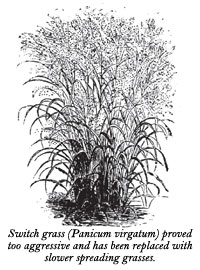
Heath hens, the eastern subspecies of the greater prairie chicken, were so abundant in the 17th century that servants complained to their masters that they were tired of eating the hens five times a week. Bison were present along the mid-Atlantic coasts as were herds of elk— think of the towns in Maryland with “elk” in their names: Elkton and Elk Forest, for example. Fire was the ecological factor that maintained these open habitats— some fires were ignited by lightning but most were deliberately set as an essential culture practice by Native Americans. Historical ecologists delving deeply into the diaries, field notes, journals, letters, writings of the early European colonists, are uncovering startling new information and insights into the dynamics and nature of eastern US habitats. I was ready to answer Dr. Sears with an enthusiastic “Yes! I’ll join you in this adventure. Let’s re-create a facsimile of the original east coast grasslands.That habitat is entirely extinct now, we have no templates or extant examples to guide our work. We will have to guess, we hope intelligently, on our restoration protocols. We will have to approach this as an experiment: we will try things and hope they work, and learn from our failures and mistakes. We know grasslands are the top priority habitat to restore because more grassland species of birds, plants, and butterflies are listed as Endangered, Threatened, Rare, or of Special Concern than species of any other habitat! Why? Because their habitat is gone. We will serve the cause of conservation better by restoring grasslands than by restoringa any other habitat. We have the potential to help reverse the population declines of more species of birds and wildlife, and remove them from State and Federal Lists, if we restore this one kind of habitat—grasslands!” Enter the government. Under an agreement with the USDA Farm Services Agency, USDA Natural Resources Conservation Service, Maryland Department of Natural Resources, county and other federal partners, and supported by the Sears Foundation, the Natural Resources primarily concerned with land protection as a means to improve water quality, reduce soil erosion, and generally reduce environmental impacts associated with intensive agricultural practices. Although miles of linear buffer zones under both CRP and CREP enrollments have been established on Chino Farms and across Maryland, the large experimental grassland planting called Grasslands Plantation is a CRP enrollment and unique in its size and block shape. Both CREP and CRP encourage a variety of habitat restorations, including wetland reclamation and forest silviculture, but upland grassland restoration has been stressed recently by government agencies and NGOs in the conservation field, because of the sharp decline in these native, open habitats throughout the US over the past century. In the past three years, managers of Department of Interior fish & wildlife refuges have been directed to convert their grain fields into native grasslands to support declining species of non-game birds. At Grasslands Plantation, we installed eight species of native warm-season grasses—big bluestem (Andropogon gerardii), sideoats grama (Bouteloua curtipendula), blue grama (Bouteloua gracilis), coastal panicum (Panicum amarum), deertongue (Panicum clandestinum), switchgrass (Panicum virgatum), little bluestem (Schizachyrium scoparium), India grass (Sorghastrum nutans) and eastern gamagrass (Tripsacum dactyloides). Two cool-season grasses were also planted— red fescue and tall fescue. Persistent management is a builtin requirement of ecological restoration projects. In the case of grasslands, invasion and takeover by woody plants—i.e. ecological succession—must be prevented to maintain prairie habitats for grassland wildlife species. Priority was given to management protocols that were designed to encourage growth in populations of those grassland birds of Special Concern, (e.g. listed as threatened, endangered, or on the National Audubon Society’s Watchlist) and with value as indicator species. Four management tools available for maintaining grasslands were 1) herbicide application, 2) mowing, 3) prescribed fire, and 4) replanting. Broadcast herbicide application was necessary in the first establishment year to suppress the profusion of weeds in favor of the installed warm-season grasses and the two-dozen attractive prairie forbs that came with the bags of warm-season grasses. After that first year, only spot applications of Roundup, Plateau, Stinger, and 2-4 D have been used in protocols to eliminate undesirable, illegal invasive species such as Canada thistle and Johnson grass. One of the installed native grass species, switch grass, became too aggressive, growing to such thick densities in some fields that the species richness of other desirable species of plants had declined significantly. Vigorous management was necessary: in 2003—those fields were burned ahead of schedule and replanted in more desirable little bluestem, broomsedge, and sideoats grama. Farmers in eastern North America are accustomed to mowing and haying their fields, and mowing seems a natural, inexpensive way to maintain grasslands. It is restricted by state statute to periods outside the nesting season of grassland birds, namely before April 15 and after August 15. But mowing has some undesirable attributes, the most important of which is that the fallen hay/ thatch fills the runways and avenues among the clumps of bunch grass, and ruins the structure of the grasslands for quail, meadowlarks, rabbits, savannah sparrows, and others that depend on the labyrinth. Because farmers who enroll their lands into CRP grasslands are not allowed to derive any commercial value from their rented property, at best a mowing protocol would allow raking the hay into bales and parking the bales along the edge of the fields to rot.
The management team is exploring alternative protocols and remedies to these new challenges. The grassland restoration project at Chino has achieved remarkable success in taking a monoculture of corn, and reproducing a prairie of rich plant diversity. By the end of the second growing season (2000), all the warm-season grasses had produced seed heads, and several of the tallest species were six feet high and undulating in golden waves in the setting winter sun. By the end of the fifth year (2003), at least 260 species of plants had been found in the restored grassland, including species not recorded in Maryland for nearly a century—for example, rattlesnake master, Eryngium yuccifolium (Apiaceae), whose seeds no doubt arrived in the bags of seeds we used in the restoration planting. Imagine going from a one-species system that had been under cultivation for 50 years to a complex ecosystem of 260 species in five years! Other than those we planted, this means hundreds of species of plants grew from either dormant seeds that lay in a seed bank in the soil for decades, or seeds that were transported by wind or animals from distant places. Like undisturbed forests that go through young and intermediate stages of maturity to climax old-growth, so, too, do grasslands go through successional stages of maturity. The dominant species of plant has been different every year. The species richness has been equally divided between native and exotic species—the good news is that the proportion of the plant diversity that is native has risen steadily over the first five establishment years. But the highlight of the Grassland Restoration Project has been the attraction of birds that require grassland habitats. At least two dozen grassland birds head the lists of Rare, Endangered, Threatened or species of Special Concern in the eastern United States. The management protocols at the CRFRC Grasslands are specifically devised to rebuild sustainable populations of birds that have declined on the Eastern Shore to the point of disappearance.
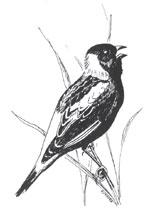
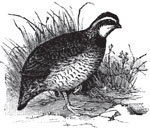
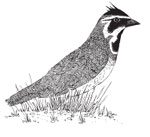
Other grassland species of concern that have responded well to the habitat restoration are northern bobwhite, field sparrow, blue grosbeak, horned lark, and vesper sparrow. Species that have visited the grasslands for snacks during migration are upland sandpipers, bobolink, bank swallows, and American pipits. In winter the grasslands serve as an important habitat for savannah sparrows, horned larks and northern harriers. Two rare species of birds on our “wish list” visited our field of dreams in 2003: a male sedge wren sang merrily in our grasslands in late August, and a spectacular LeConte’s sparrow was netted and admired in October! We await anxiously for other top priority grasslands birds to breed—eastern meadowlark, Henslow’s sparrow, upland sandpiper, and bobolink—and others such as sandhill crane, short-eared owl, snow bunting, and Lapland longspur to establish regular winter residence. By all measures, the experiment has been resoundingly successful in recreating an Atlantic coastal upland grassland resembling the mid-Atlantic coastal grasslands of yesteryear. We cannot hope or expect to include all components of the primeval prairies, such as the elk, bison, wolves, and heath hens—the extinct eastern race of the greater prairie chicken, the last of which died on Martha’s Vineyard in 1932. Management of the predators that are present—the red fox is especially abundant—is severely restricted by local law. But if the restored grasslands serve to save some rare species that require grasslands, to rebuild populations of others, and to further the cause of grassland species across the country, then these fields of dreams will have served their purpose. The Grassland Plantation restoration project at Chino Farms represents a thrilling model that holds endless possibilities for other regions. We are delighted it is gaining national attention. Doug Gill is a professor of biology at the University of Maryland. If he’s not in his lab or the field, he can most often be found singing bass with the Choral Arts Society.
|
 The forests, fields, and lakes of Mount St. Helens were obliterated
in 1980 in a cataclysm as
destructive as any known, its slopes cleaned of life utterly, covered in many
feet of ash. Yet now, 20 years later,
spruces and firs sprout, forests flourish
anew, montane meadows are adorned in
daisies, frogs and fish and salamanders
swim in blue lakes once again. And
think about New England and Appalachia—
totally chopped down and burned
one hundred years ago and now over
95% reforested! Think how Lake Erie
and Lake Washington near Seattle have
rebounded from their death warrants 40 years ago. In fact, there is no such thing
as pristine—every square centimeter of
land and every cubic meter of water
have been impacted by people, past or
present, some lightly and some severely.
But the happy, good news is that, if the
abusive instrument is removed and a
helping hand is lent, even the most
battered and disfigured lands and waters
can recover health and beauty.
The forests, fields, and lakes of Mount St. Helens were obliterated
in 1980 in a cataclysm as
destructive as any known, its slopes cleaned of life utterly, covered in many
feet of ash. Yet now, 20 years later,
spruces and firs sprout, forests flourish
anew, montane meadows are adorned in
daisies, frogs and fish and salamanders
swim in blue lakes once again. And
think about New England and Appalachia—
totally chopped down and burned
one hundred years ago and now over
95% reforested! Think how Lake Erie
and Lake Washington near Seattle have
rebounded from their death warrants 40 years ago. In fact, there is no such thing
as pristine—every square centimeter of
land and every cubic meter of water
have been impacted by people, past or
present, some lightly and some severely.
But the happy, good news is that, if the
abusive instrument is removed and a
helping hand is lent, even the most
battered and disfigured lands and waters
can recover health and beauty.
 Unprecedented numbers of acres of
pastures that have been eaten and
pounded by the feet of cows and horses
for centuries, or croplands that have
been tilled and weeded and herbicided
and pesticided for decades, will be
allowed to recover to rejuvenated states
of ecological health in sanctuaries and
preserves. But “HOW?” ask the conservation
decision-makers. Having decided
that restoration is the #1 priority, “How
do we restore these lands and waterways?
Can you academics, schooled as you are in the books of theoretical
ecology, help?”
Unprecedented numbers of acres of
pastures that have been eaten and
pounded by the feet of cows and horses
for centuries, or croplands that have
been tilled and weeded and herbicided
and pesticided for decades, will be
allowed to recover to rejuvenated states
of ecological health in sanctuaries and
preserves. But “HOW?” ask the conservation
decision-makers. Having decided
that restoration is the #1 priority, “How
do we restore these lands and waterways?
Can you academics, schooled as you are in the books of theoretical
ecology, help?”
 Less than four percent of the great steppes of Central Asia exist in “pristine
state.” To my utter surprise I learned
that grasslands, pine savannah, and
heath collectively was the dominant
habitat along the coastal eastern
seaboard of the United States—from
North Carolina, through the Delmarva
peninsula, unglaciated New Jersey, Long
Island, Cape Cod and Cape Ann of
Massachusetts—at the time of European
settlement.
Less than four percent of the great steppes of Central Asia exist in “pristine
state.” To my utter surprise I learned
that grasslands, pine savannah, and
heath collectively was the dominant
habitat along the coastal eastern
seaboard of the United States—from
North Carolina, through the Delmarva
peninsula, unglaciated New Jersey, Long
Island, Cape Cod and Cape Ann of
Massachusetts—at the time of European
settlement.
 We chose prescribed fires as the
management tool of choice. There is little
doubt that fire was the major ecological
factor maintaining the open habitats in
pre-colonial times. At the design table in
1998, we guessed that a three-year
rotation of fire management would be
ecologically realistic, and planned to burn
one-third of the 227 acres every year once
it was established, thereby offering one-,
two-, and three-year-old fields every year
to maintain wildlife diversity. Establishment
of our grasslands and growth of the
plants was so successful and rapid, we
initiated our fire cycle in 2001, and began
a new cycle in 2004. So far the results
have been as expected and positive, but in
some ways too successful: the growth
of several species, including switch
grass, is too strong, apparently as a
consequence of the late winter fires.
We chose prescribed fires as the
management tool of choice. There is little
doubt that fire was the major ecological
factor maintaining the open habitats in
pre-colonial times. At the design table in
1998, we guessed that a three-year
rotation of fire management would be
ecologically realistic, and planned to burn
one-third of the 227 acres every year once
it was established, thereby offering one-,
two-, and three-year-old fields every year
to maintain wildlife diversity. Establishment
of our grasslands and growth of the
plants was so successful and rapid, we
initiated our fire cycle in 2001, and began
a new cycle in 2004. So far the results
have been as expected and positive, but in
some ways too successful: the growth
of several species, including switch
grass, is too strong, apparently as a
consequence of the late winter fires.
 As noted earlier, one such species,
the grasshopper sparrow, an obscure
plain little brown job (LBJ, as birders
say), arrived in hordes within one month
of planting in April, 1999. The research
teams at Chino have marked all the
breeding adult grasshopper sparrows
(1,200 so far) with colorful bands on their
legs for easy individual identification
with binoculars and telescopes. The
movements and activities of these
furtive birds have been recorded on
hand-held GPS units (Geographical
Positioning Systems), and downloaded
into technicolor maps on the computer
through the software ArcView. Visit our
website,
As noted earlier, one such species,
the grasshopper sparrow, an obscure
plain little brown job (LBJ, as birders
say), arrived in hordes within one month
of planting in April, 1999. The research
teams at Chino have marked all the
breeding adult grasshopper sparrows
(1,200 so far) with colorful bands on their
legs for easy individual identification
with binoculars and telescopes. The
movements and activities of these
furtive birds have been recorded on
hand-held GPS units (Geographical
Positioning Systems), and downloaded
into technicolor maps on the computer
through the software ArcView. Visit our
website,